This is the first in an occasional series about my 2022 reading project on loneliness.

Reading Project on Loneliness
I often have some sort of reading project going. I like projects and having a reading project gives me a way to challenge myself.
This year one of my two reading projects is to read about loneliness. My other reading project is focused on reading about Los Angeles history and culture.
Loneliness seems a fitting topic given the global Covid pandemic and the isolation many of us have dealt with on and off since March of 2020.
But my interest in loneliness started years before Covid.
Here’s how it started.
Memoir on Loneliness
In 2017 I found a copy of “Lonely: Learning to Live with Solitude” by Emily White left behind in the room where I frequently conducted training for work.
Many others used this room, it was a popular space for meetings and classes, and there were always notebooks or coffee mugs or cozy fleece jackets left behind. These vagabond items would be placed on the shelf at the back of the room to be collected by the owner.
I put this book in the lost and found area, assuming someone would return to pick it up.
The following week the book still remained unclaimed. I picked it up and paged through it, curious now to learn it was a memoir.
Week after week “Lonely” sat there unclaimed.
Finally, never one to let a book go abandoned, I decided to take this memoir home with me.
I finally got around to reading it in 2021.
While this was the first book I’d read on loneliness, this wasn’t the first time I’d thought about the concept of loneliness or the first time I was drawn to learning more about this human experience.
Loneliness and the City
In 2008 I came across an article in New York Magazine (which is hands-down my favorite magazine!) about loneliness in New York City.
And it was this article that first got me thinking about loneliness.
In “Alone Together” Jennifer Senior highlighted research on loneliness and the importance of social relationships for good physical and good mental health.
Yet the picture of cities—and New York in particular—that has been emerging from the work of social scientists is that the people living in them are actually less lonely. Rather than driving people apart, large population centers pull them together, and as a rule tend to possess greater community virtues than smaller ones. This, even though cities are consistently, overwhelmingly, places where people are more likely to live on their own.
Alone Together By Jennifer Senior
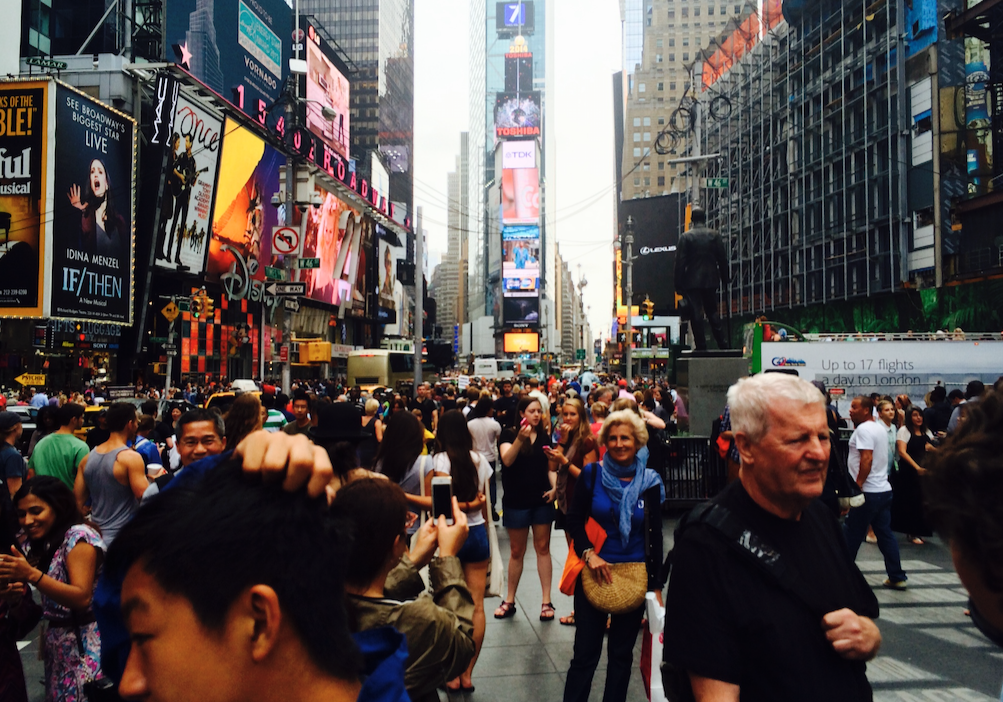
What I found particularly interesting was that even though there is a high percentage of individuals living alone in NYC, which we might assume would lead to increased loneliness, the sheer multitude of people and the many ways in which people must interact in their day-to-day life just to get by in the city had a positive impact and decreased loneliness.
It turns out rubbing elbows with strangers on the subway, standing with a crowd at a crosswalk, and running into neighbors on the building stoop or in the apartment hallway have a positive impact on us.
There is a strength in weak ties.

Loneliness and Public Health
The government, public health and health care sectors are considering the impact of loneliness too.
In 2017 Great Britain appointed a Loneliness Minister. Australia has designated a government appointment to address loneliness and Japan has followed with a similar appointment driven in large part by isolation related to Covid.
The latest news I am aware of is Italy considering an approach to address loneliness and isolation in light of the death of an elderly woman which went undiscovered for two years.
The Covid pandemic and the periods of isolation have only served to raise our awareness of loneliness and the impact this can has on individual’s health and on community well being.
Loneliness at Work
Likewise, given the impact of Covid on our worklife, employers are now discussing the impact of loneliness.
Now business and industry leaders are starting to consider how to better support employees in reconnecting and rebuilding workplace relationships.
In this Fast Company article, “We Need to Talk About Why So Many People are Lonely” there’s reference to research that found many employees report feeling lonely but were reluctant to talk about experiencing loneliness.
This is an important point.
We tend to think of loneliness as an individual failing. That is due to something we’ve done, or failed to do, in terms of building relationships. Or if someone mentions loneliness the pat response is, “put yourself out there” or “call me if you wanna hang,” but it turns out it’s more complicated than that.
There is a stigma and a sense of shame attached to loneliness, making people less likely to talk about about loneliness. This, of course, only serves to increase the sense of separation, isolation and loneliness. It become a vicious cycle.
This experience of feeling lonely, feeling shame for feeling lonely, hiding it, then feeling even more isolated was echoed in Emily White’s memoir.
Changing the Way We Talk About Loneliness
Perhaps the pandemic has changed this dynamic.
Just maybe this shared experience will grant us all a bit more understanding and empathy for the experience of loneliness.
Now that Covid protocols are changing and we are starting to more fully enter back into the world the timing seems right to begin working on building a greater understanding of loneliness.
Perhaps we can come feel a bit more comfortable in talking about loneliness.
Sharing What I Learn About Loneliness
I’m planning on reading more about loneliness over the course of this year.
I’ve been interested in this topic for well over a decade. I’m using this reading project to increase my knowledge on this topic and build my own self-awareness and resilience, too.
I plan to share what I learn here in an occasional series on my 2022 reading project on loneliness.
 The Seventeenth Line