There are worse crimes than burning books.
One of them is not reading them.
Ray Bradbury
Fahrenheit 451 by Ray Bradbury was my first introduction to reading science fiction.
I must confess, I read this book to help a highschool boyfriend write a paper for his English class. A bit of advice, if he doesn’t read, he’s not worth the time. Back to Fahrenheit 451. I read a lot in high school, but I hadn’t discovered Ray Bradbury or even really explored reading science fiction.
As a book lover I was immediately caught up in the premise of Fahrenheit 451.
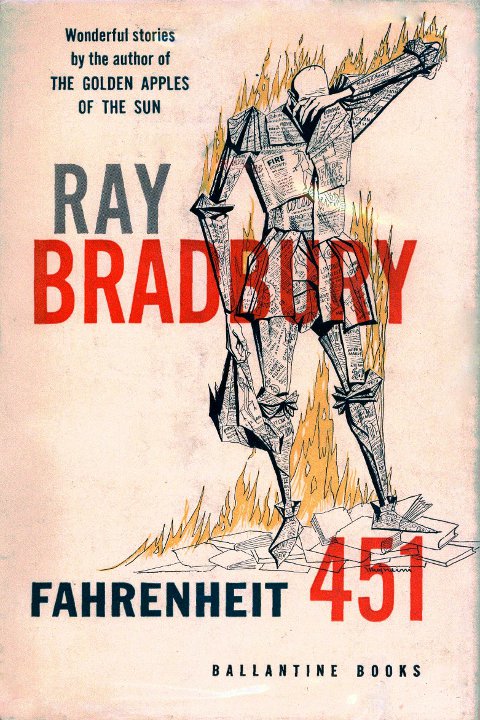
For those not familiar with this novel, Guy Montag is a fireman and his job is to burn books. In this dystopian future ideas are dangerous. People have short attention spans, free time is spent watching mindless television and leaders are uncomfortable with the content of books. To curtail deep thoughts and keep people compliant a policy is put in place to burn books. But our fireman has been having some enlightening conversations with a neighbor, he’s even taken home a few book from job sites, his wheels are turning and he’s beginning to wonder why he’s burning books.
I still remember staying up late into the night to finish this book!
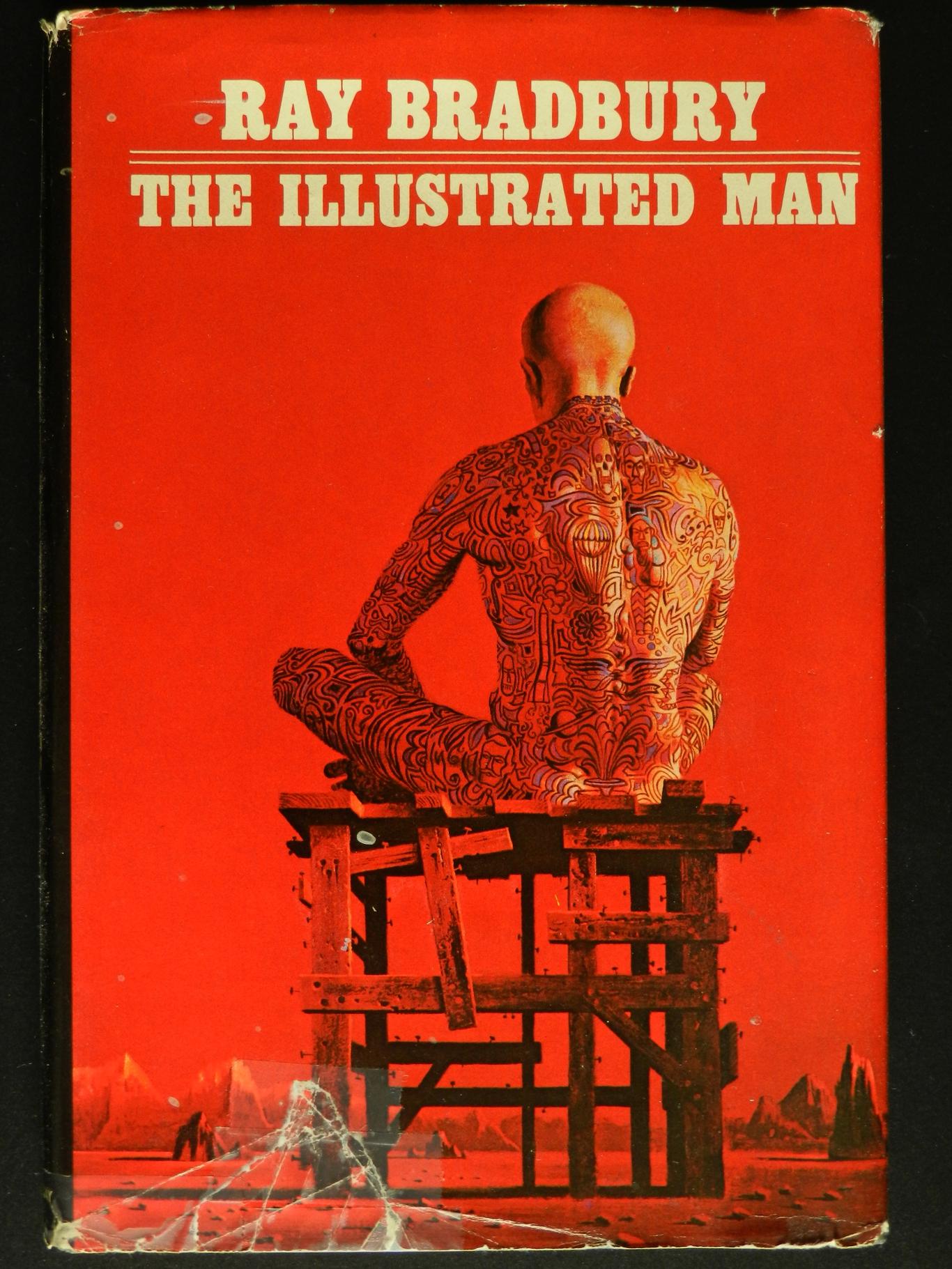
Somewhere along the way that high school boyfriend fell out of favor, but my love for Ray Bradbury blossomed. I checked the shelves at my local library and discovered The Illustrated Man, Something Wicked This Way Comes and The Martian Chronicles, along with a number of Bradbury’s short stories.
Ray Bradbury opened the door to science fiction.


I explored other science fiction writers. I tried Stephen King’s early short stories, read a few Michael Crichton novels, added Octavia E. Butler’s books to my reading list and fell in love with Margaret Atwood.
What I immediately loved about sci-fi was imagining the future. Sci-fi presented both the best and worst of what might be possible and rooted that imagined future in a present day reality. There was enough truth to make the fiction seem a possibility.
It’s funny, Fahrenheit 451 was written in 1953, over half-a-century ago, and it still feels current. That possible future of burning books and limiting ideas, dreamed up by Ray Bradbury so long ago, still seems like it could come to pass.
Today, everyone is vying for our attention. Traditional media and social media reduce complex topics to short and sexy sound bites or brief but provocative exchanges which draw us in but provide little substance. Plus, we’re busy! So busy. What with a 40+ hour work week, side-hustles and home and family duties, free time is limited. Things move quick, more rapidly than they ever have before. We don’t seem to have the information or the time we need to truly consider complex topics. It’s almost as if we are kept from deep thinking and, like Guy Montag’s wife, Mildred, spend our days tuned in to a screen, engaged in too much mindless chatter.
Is it too far of a leap, then, to see how our current reality might evolve to a point where limits are set on exploring complex ideas? Maybe it starts in the name of easing tensions or perhaps protecting others. We might even think it good idea. We may not initially realize what we stand to lose.
Maybe the more critical question is, does the future possibility Bradbury laid out for us in this novel give us a reason to pause and consider things and help us to guard against such a path?
I think this is where sci-fi is most exciting. It illuminates the possible paths before us and helps use to envision what may be down the road.
Books are considered dangerous because they offer us time, space and ideas so we can think deeply and reflect on complex topics. And that is powerful.
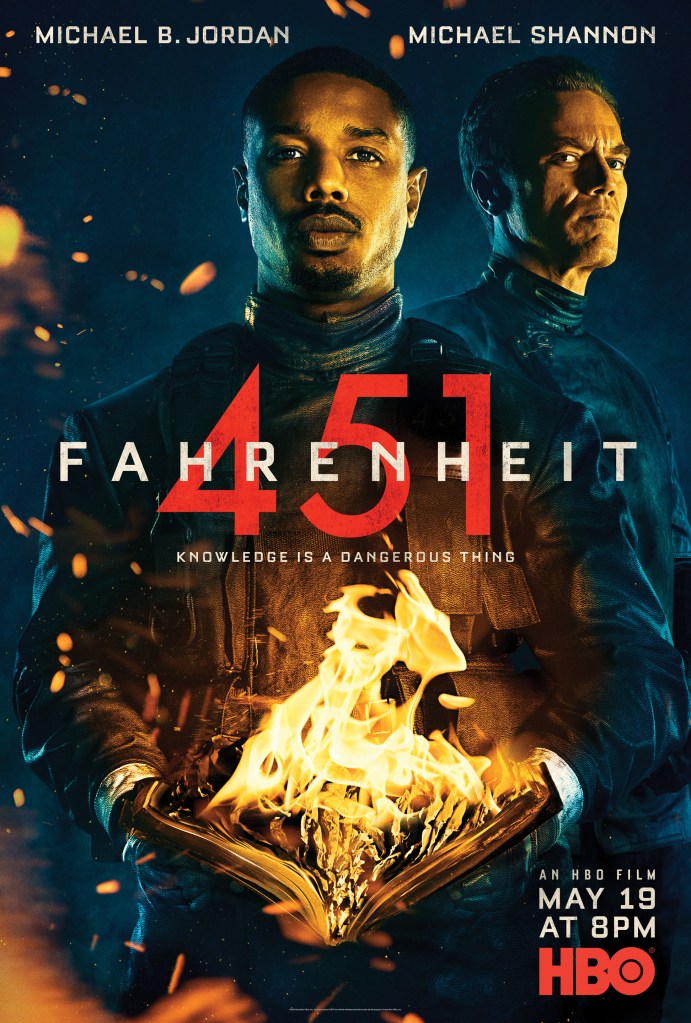
An aside, there was a 2018 film based on Fahrenheit 451, so I’m not the only one who thinks this story still seems timely. (I haven’t seen this movie. Have you? Is is worth watching?)
Circling back to Ray Bradbury.
Over the years I’ve made an effort to learn about Ray Bradbury, which has only made me like him more. If you’re interested in learning about him his estate has a great website with information about his life, his work, and his vision.
Bradbury had a nearly 70-years-long writing career. He wrote daily and shared that establishing this habit of sitting down to write every day was one of the best decisions he had ever made. He even wrote a book about the practice of writing. As I’m using this space to exercise my writing muscles, I like thinking about Bradbury’s approach to writing. Writing is work. I think of it as a craft that takes effort and commitment, not as a “gift” one simply has, but a “gift” that one works at and fosters into being.
Ray Bradbury was also a great supporter of public libraries. As am I. He spoke often of educating himself in libraries and he advocated for public library funding. He was even inducted into the California Library Hall of Fame in 2016 (who knew there was such a thing!).
And off course, the story of Bradbury renting a typewriter for ten-cents per half-hour at UCLA’s Powell Library to write what would eventually become Fahrenheit 451 is the stuff of legend!

“I went down in the basement of the UCLA library and by God there was a room with 12 typewriters in it that you could rent for 10 cents a half-hour. And there were eight or nine students in there working away like crazy.” – Ray Bradbury
LOS ANGELES TIMES, JUNE 6, 2021 – RAY BRADBURY AND THE DIME-AT-A-TIME TYPEWRITER OF ‘FAHRENHEIT 451‘
LOS ANGELES MAGAZINE, DispL.A. Case #71: Ray Bradbury’s Typewriter
So, that’s how I discovered science fiction.
It all started with a high school boyfriend who didn’t care for reading. Add to that one Ray Bradbury novel and multiple visits to the public library and sci-fi is now a favorite genre.
Have you read Fahrenheit 451 or another of Ray Bradbury’s books?
Do you read science fiction?
How were you introduced to this genre?
Note, this article was originally published in 2012 for a related bookclub discussion. It has been edited and updated as part of my relaunch of The Seventeenth Line book blog.
 The Seventeenth Line
I did read science fiction in my young days: Harlan Ellison, Henry Kuttner, Phillip Jose Farmer. I breathed a sigh (too soon, I think) when 1984 came and went. But before I knew it was called science fiction, I fell in love with HG Welles and Jules Verne.
I hope I’m not offending you, Sally, but I think our dystopian future has arrived. We may not burn books but we cancel people whose ideas don’t fit the mainstream narrative.
So glad to have another science fiction reader here!